
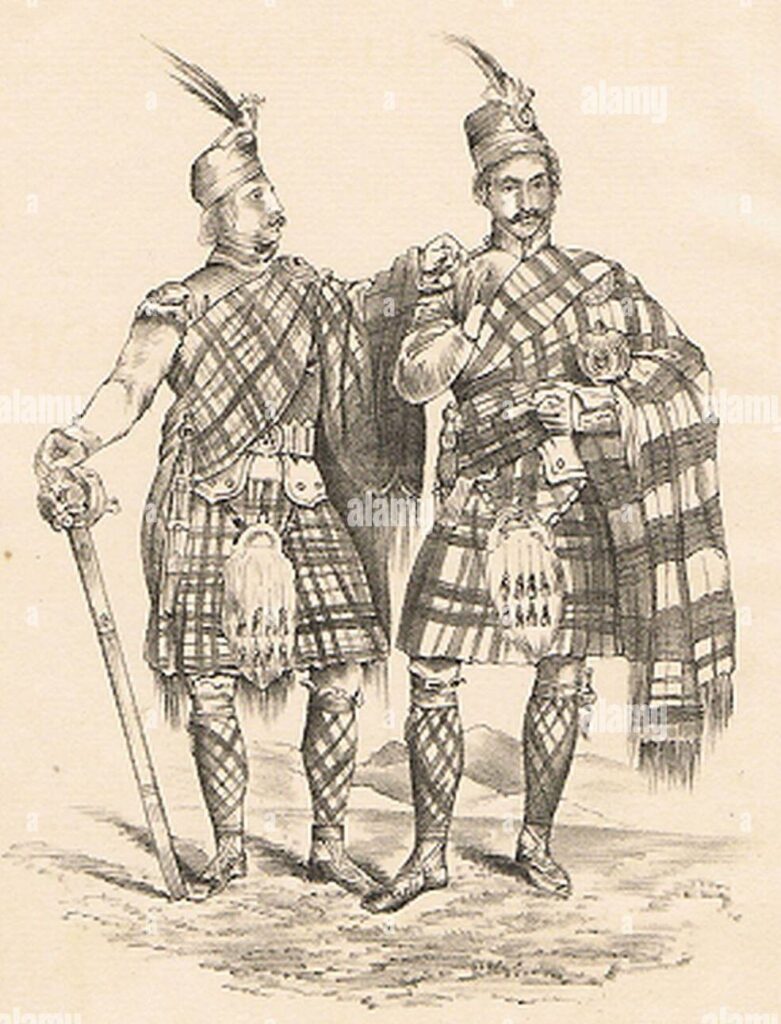
A tartan kilt on display in the museum’s Victorian gallery and a rare book on tartans in the museum’s library are directly linked to two infamous figures from the Victorian era; brothers who claimed to be Bonnie Prince Charlie’s grandsons.
Who were the Sobieski brothers?
John Carter Allen (1795–1872) and Charles Manning Allen (1802–1880) started claiming to be the grandsons of Bonnie Prince Charlie from around 1839 and used the names John Sobieski Stuart and Charles Edward Stuart respectively.
In the 1820s they had moved to Edinburgh, converted to Catholicism and began immersing themselves in all things Scottish. The pair established a reputation for championing the Gaelic culture, learning the Gaelic language, dressing in Highland clothes, and collecting information relating to the folklore and customs of the Highlands. Eventually they were best known for their contribution to the popularisation of tartan. Perhaps the brothers’ greatest achievements were the publications Vestiarium Scoticum (Edinburgh, 1842) and The Costume of the Clans (Edinburgh, 1845) which had a lasting influence on our understanding of tartan in an historical context and helped popularise tartan in the Victorian Age.
Many in Victorian society were hoodwinked into believing their bogus claim that their father was the legitimate heir of Prince Charles Edward Stuart and his wife Princess Louise of Stolberg; and that they were the Stuart dynasty heirs, John Sobieski Stuart and Charles Edward Stuart. Lord Lovat even gifted the brothers a house on the island of Eilean Aigas, 8 miles from Inverness and the brothers’ last resting place is close by in the graveyard of Eskadale near Inverness.
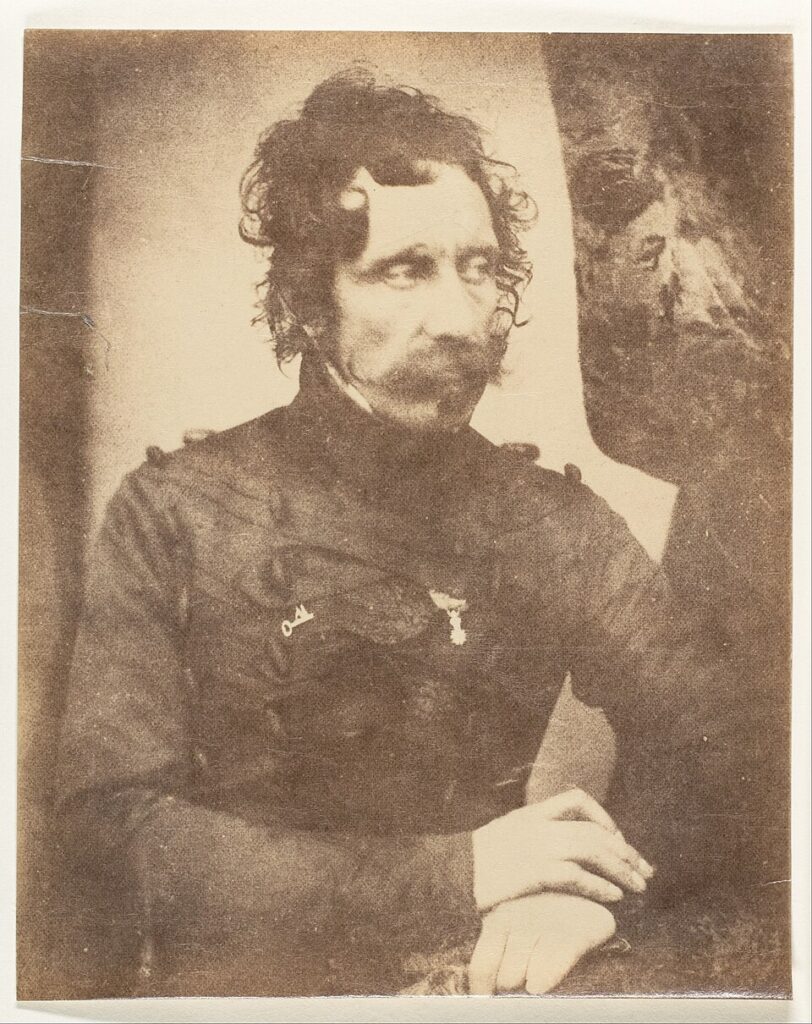
In fact, the brothers were English and their claims that their father had been born in Italy as the secret heir of Bonnie Prince Charlie false. The story that he was smuggled out of Italy in secret to avoid assassination were fabricated and their father, Thomas Allen (1767–1852) had been a Lieutenant in the British Navy. However, not everyone believed their tales; Sir Walter Scott described them as “men of warm imaginations”.
How did the Sobieski’s dupe Victorian society?
By the 19th century the Jacobites and Highland clans were no longer considered a threat to the existing order and a romanticism around all things Highlands was beginning to develop. The brother’s capitalised on a growing fascination with the Stuart dynasty and Highland culture.
In 1842 they published Vestiarium Scoticum which illustrated what they claimed to be individual clan tartans. The Sobieski’s claimed the publication was based on an ancient manuscript they possessed that was collated along with a second manuscript from the library of the Monastery of St Augustine in Cadiz from 1571. Some of these tartans the Sobieski’s had designed themselves.
Eventually the authority of this text and their other publication The Costume of the Clans (Edinburgh, 1845) were exposed to be fantasy and forgery. With doubt cast over the brothers’ integrity, they were outcast from society.
What objects in the West Highland Museum are associated with the Sobieski brothers?
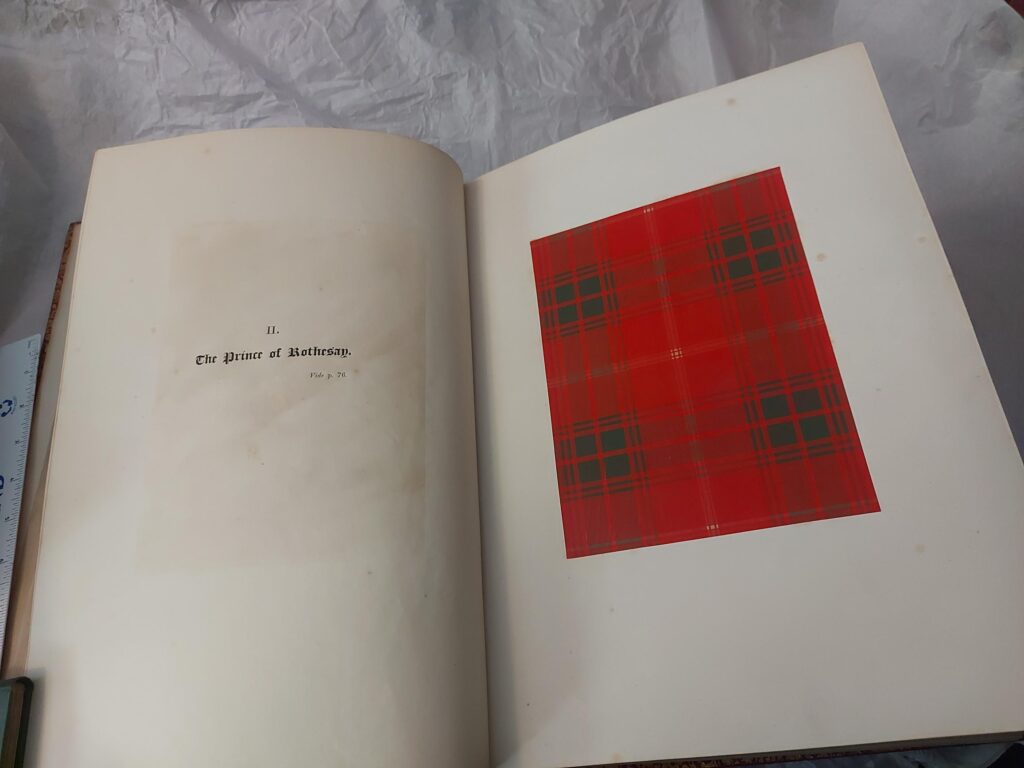
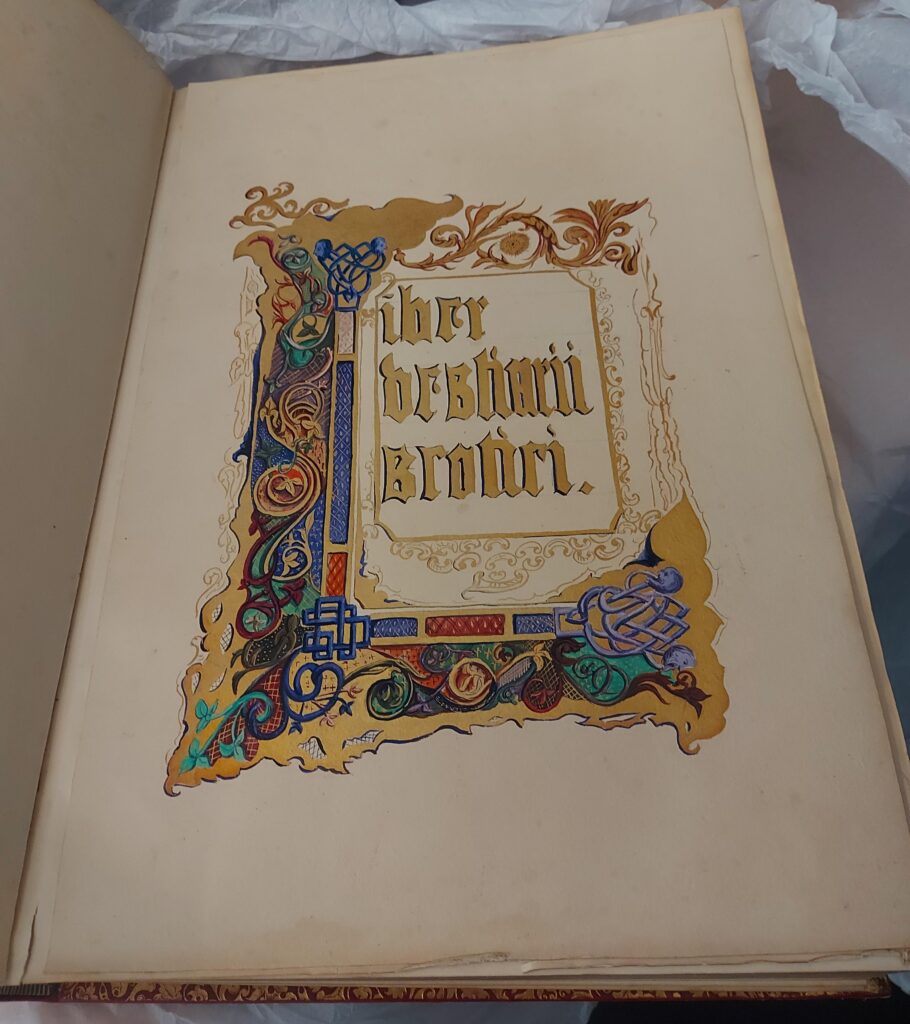
The book in the West Highland Museum library is the famous Vestiarium Scoticum a book first published in 1842 by William Tait of Edinburgh as a limited edition. The museum acquired its copy of this rare edition in 1954 from Douglas & Foulis Booksellers and Librarians in Edinburgh with financial assistance from the National Fund for Acquisitions.
The brothers edited and illustrated the Vestiarium Scoticum: from the manuscript formerly in the Library of Scots College at Douay. With an Introduction and Notes, by John Sobieski Stuart. The book lists clans from all over Scotland and includes 75 colour plates to illustrate the tartans of these clans
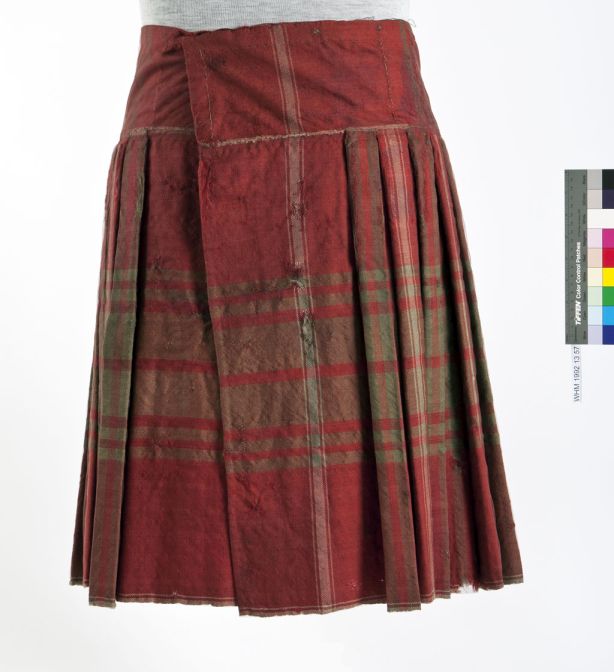
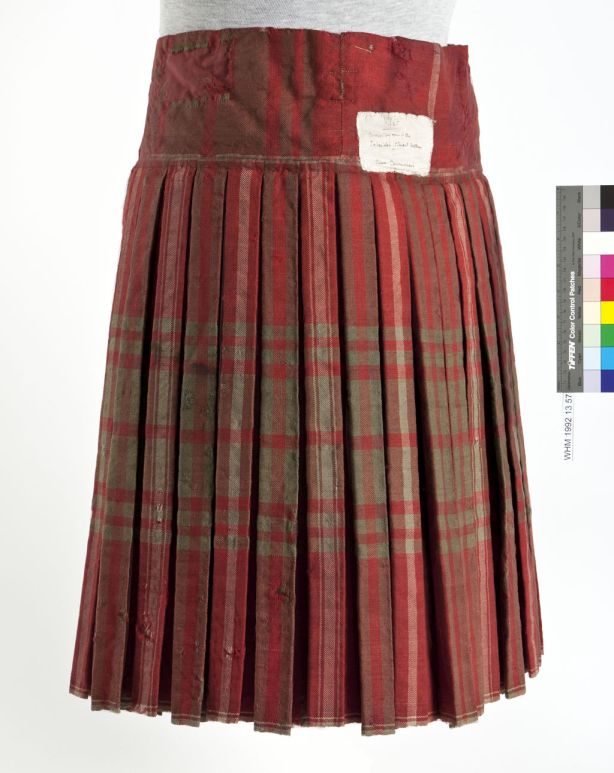
The other object in the West Highland Museum’s collection is a hard-tartan box pleated kilt in the Duke of Rothesay tartan c.1830-35 and is said to have belonged to one of the Sobieski brothers. The Duke of Rothesay tartan is believed to have been inspired by the Sobieski brothers, who are associated with the design. This tartan, originally known as “Prince of Rothesay,” was recorded in the Vestiarium Scoticum.
The kiIt was acquired by the famous Victorian folklorist, Alexander Carmichael and has been in the West Highland Museum collection since 1942, first as a loan and latterly as part of the permanent collection. (WHM 1992.013.057) To find out more visit the museum’s collections management system: eHive
Whilst the evidence of the brothers owning this kilt is unproven, it is certainly contemporary with them and their connection with the design makes it likely that it did belong to them.[1] To find out more about the kilt you can read an earlier blog by tartan historian Peter Eslea MacDonald.
[1] MacDonald, Peter Eslea. “Sobieski Kilt”, 2021. West Highland Museum blog.
What was their legacy?
Although ultimately the Sobieski brothers were exposed as fraudsters and lost their reputation, in the long term they did succeed in that they were instrumental in popularising tartan in the Victorian era. One theory is that the tartan manufacturers encouraged the publication as the popularity of tartan sky-rocketed from 1842.[2]
The brothers, along with the Highland Society of London, and figures such as Sir Walter Scott were hugely responsible for the growing trend for all things Scottish in the 19th Century, with some of the Sobieski’s designs going widely into circulation during this period. Their enduring legacy is perhaps their role in popularising tartan so that it was encompassed into mainstream culture.
[2] “Tartanology” on the Carmichael Watson blog.
Vanessa Martin
Curator
West Highland Museum
Sources / Further Information:
Carmichael Watson Blog. “Tartanology” https://carmichaelwatson.blogspot.com/2013/03/tartanology.html [accessed 06/05/2026]
eHive. West Highland Museum collections. https://ehive.com/collections/6174/west-highland-museum [accessed 06/05/2026]
MacDonald, Peter Eslea. “Sobieski Kilt”, 2021. West Highland Museum blog. https://www.westhighlandmuseum.org.uk/2021/05/08/sobieski-kilt/
Vestiarium Scoticum: from the Manuscript formerly in the Library of the Scots College at Douay. With an Introduction and Notes, by John Sobieski Stuart. William Tait, Edinburgh: 1842 [West Highland Museum collection]
West Highland Museum’s collections information. https://www.westhighlandmuseum.org.uk/object/?itemid=247 [accessed 15/04/2026]
Wikipedia. “Sobieski Stuarts” https://en.wikipedia.org/wiki/Sobieski_Stuarts [accessed 06/05/2026]
Wikipedia. “Vestiarium Scoticum” https://en.wikipedia.org/wiki/Vestiarium_Scoticum [accessed 06/05/2026]
YouTube. Scotland Unplugged. “The Great Tartan Con – How the Sobieski Stuarts fooled the tartan world” https://www.youtube.com/watch?v=pUvMwn81JXs [accessed 15/04/2026]